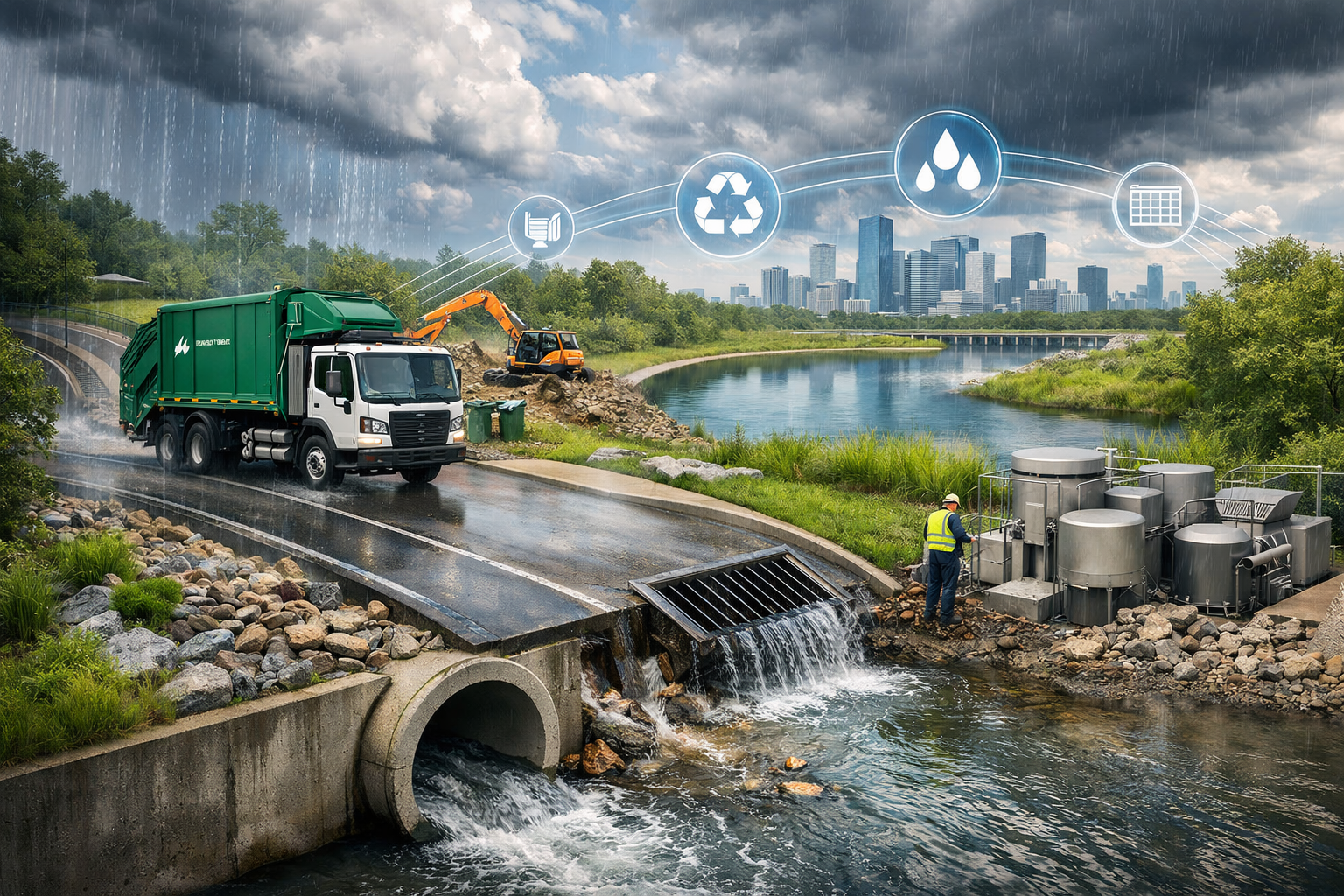
How Waste Management Services Support Effective Stormwater Management
If you’ve ever been stuck in a classic Australian downpour—the kind where the sky turns purple and the wipers can’t keep up—you’ve seen stormwater management in action (or, if the road is flooding, you’ve seen it struggling). While we usually look at the clouds during a storm, the real magic or havoc is happening under our tyres.
In Australia, keeping our streets from turning into rivers isn’t just about big pipes; it’s actually a massive game of “keep away” played by professional waste management services. Here’s a look at how the folks who take away our rubbish are actually the unsung heroes of dry, safe roads in the country.
The Great Australian Blockage
We love our leafy streets and our outdoor lifestyle, but that comes with a lot of “stuff” hitting the pavement. We’re talking about leaf litter, grass clippings, stray plastic bags, and that one coffee cup someone “missed” the bin with. When the rain hits, all that debris gets swept toward the drains. This is where stormwater management begins.
If the waste management crews haven’t been around to sweep the streets or empty the public bins, that rubbish heads straight for the side-entry pits. Once a drain is clogged, the water has nowhere to go but up. A single plastic bag can be the difference between a clear road and a localised flood that ruins a basement or causes a car to submerge.
Gross Pollutant Traps: The “Kidneys” of the City
In many Aussie suburbs, we use things called Gross Pollutant Traps (GPTs). Think of these as giant underground sieves. They sit inside the stormwater network and catch the “gross” stuff—bottles, branches, and silt—before it reaches our beautiful beaches or creeks.
But a GPT has a finite capacity. If it’s full, it stops working. This is where specialised waste management services come in. They use high-tech vacuum trucks to suck out the captured gunk. Without this regular maintenance, our stormwater management system would just be a series of very expensive, very clogged pipes.
Protecting Our Iconic Waterways
We Australians live for our water. Whether it’s a weekend at Bondi or a fishing trip on the Murray, we want it clean. Most people don’t realise that stormwater isn’t treated like the water from your shower or toilet. It goes straight from the street into the environment.
By managing waste at the source—keeping construction sites tidy and clearing industrial runoff—we ensure that “stormwater” stays as just “water” and doesn’t become a toxic soup of oils and trash.
Why It Matters for Your Commute
Ever noticed a “soft spot” or a big pothole that appears after a week of rain? That’s often a failure of stormwater management. When water sits on the road because the drains are blocked by debris, it seeps into the foundations of the road.
It rots the pavement from the inside out. By keeping the gutters clear, waste services aren’t just cleaning up; they’re protecting the structural integrity of our highways.
Better Together: A Shared Responsibility
Effective stormwater management in Australia is a team sport. It’s about more than just avoiding a puddle on the way to work; it’s about looking after the “Big Backyard” we all share. When we treat our gutters like the entry point to our oceans—which they are—we take the pressure off our infrastructure.
Australia’s climate is only getting more unpredictable. Still, with coordinated stormwater management and a “fair go” approach to waste, we can keep our communities resilient and our coastlines pristine for the next generation of weekend explorers.
- The Councils: Design the smart systems.
- Waste Services: Clear the debris and maintain the traps.
- The Rest of Us: Make sure our grass clippings don’t end up in the gutter and our trash stays in the bin.
When these three groups work together, we get roads that stay open and beaches that stay swimmable, even after a summer cracker of a storm.
FAQs
1. Does stormwater go to a treatment plant?
Usually, no. In most of Australia, it flows directly into local creeks, rivers, and the ocean.
2. Why is leaf litter a problem?
In large amounts, leaves rot in the drains, removing oxygen from the water and killing fish, while also causing physical blockages.
3. What is a GPT?
A Gross Pollutant Trap (GPT) is an underground filter that catches litter and sediment in the stormwater system.
4. How can I help with stormwater management?
Keep your street gutter clear of leaves and never wash chemicals or paints into the downpipes.
5. Who cleans the big highway drains?
Specialised waste management contractors use industrial “vactor” trucks to keep high-speed road networks clear.
Disclaimer
This article is intended for general informational and educational purposes only. While every effort has been made to ensure the accuracy and relevance of the information provided, it does not constitute professional, engineering, environmental, or regulatory advice. Stormwater management practices, waste management responsibilities, and regulatory requirements may vary by location, council, and jurisdiction across Australia.
Readers should not rely solely on the content of this article when making decisions related to stormwater infrastructure, waste services, environmental compliance, or property management. For site-specific guidance, technical assessments, or legal obligations, consult qualified professionals, local councils, or relevant regulatory authorities.